

How it works
- Multiple users request the same uncached file at the same time
- Bunny sends a single request to your origin
- As the response streams back, it’s simultaneously delivered to all waiting clients
- The file is cached for future requests
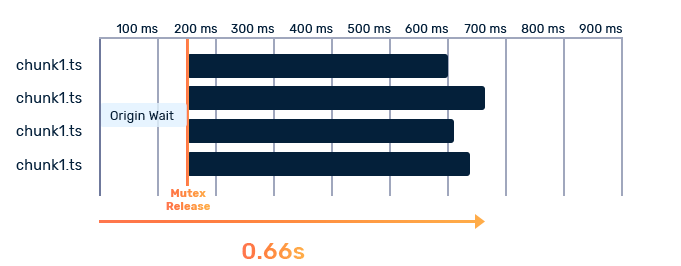
Without coalescing, each simultaneous request hits your origin. With coalescing, they're combined into one.
When to use it
Request Coalescing is ideal for:- Live streaming: Thousands of viewers requesting the same video segments simultaneously
- High-traffic public APIs: Cacheable responses served to many users at once
- Traffic spikes: Sudden bursts of requests for the same resources
Request Coalescing reduces origin load and can improve cache hit rates during
high-concurrency scenarios.
Enabling Request Coalescing
- Go to your Pull Zone in the dashboard
- Navigate to Caching
- Enable Request Coalescing
Per-request control with Edge Rules
To override the zone-level setting for specific paths or request conditions, create an Edge Rule with the Enable Request Coalescing or Disable Request Coalescing action- Go to Edge Rules in your Pull Zone settings and click Add Rule
- Select Enable Request Coalescing or Disable Request Coalescing
- Add conditions to match the requests you want to target, such as a URL path pattern, file extension, or request header
A common pattern is to leave Request Coalescing off at the zone level and
enable it only on paths serving publicly cacheable content, keeping
authenticated routes safely excluded.
Important limitations
Request Coalescing triggers on any uncached request—both static and dynamic resources. Only enable it for Pull Zones serving publicly cacheable content.Not a guarantee of single requests
Request Coalescing does not guarantee only one request ever reaches your
origin. It only combines requests that arrive simultaneously for the same
resource.
- Requests arrive sequentially rather than at the same time
- Requests come from different CDN PoPs (coalescing runs independently on each edge node)